8 Unique Ways to Gain New Knowledge & Level Up at Work
•
7
MIN READ

AI Summary by Fellow
They say knowledge is power. Think about it: Your current mentors and the senior leaders you regularly interact with at work likely have a vast knowledge of your company’s products and services and their field of work, and they might even keep up to date with general industry news.
The world’s most successful people find ways to incorporate learning into their day-to-day work.
The ability to acquire knowledge effectively is a skill in itself. It’s the key to opening doors that would otherwise be locked and often controls access to opportunity and advancement in the workplace.
Let’s discuss knowledge acquisition, why it’s important, and how you can use your knowledge base to seek new opportunities in your personal and professional life.
Why is continuous learning essential in the AI era?
Knowledge is the ultimate currency in an increasingly automated world. While AI can handle rote tasks, gaining new knowledge allows you to develop the human-centric insights necessary to oversee complex AI workflows. It sharpens your ability to think critically across disciplines, bridging the gap between technical possibilities and strategic goals.
In 2026, being "knowledgeable" means more than just having facts; it means having the reasoning and problem-solving skills to troubleshoot an AI-driven project or pivot a team's strategy in real-time. When you master the nuances of how these tools integrate with human talent, you develop the high-level perspective required for modern leadership. At work, this translates directly to becoming the person who doesn't just use AI, but architects the future of how the organization functions.
8 unique ways to gain new knowledge
1. Follow the builders
Social media is no longer just for scrolling; it’s a real-time stream of AI breakthroughs. In 2026, the best "how-to" guides aren't in manuals—they are in 60-second TikToks or X threads showing how someone used Lovable to build a functional app in minutes or how they automated their SDR team with custom GPTs. To stay ahead, follow the builders. When you see a workflow that looks like magic, ask your colleagues which Discord communities or Reddit threads they are using to debug their latest AI agents.
2. Subscribe to timely podcasts
The best way to learn how leaders are implementing AI in the workplace is to let the experts curate the signal from the noise. Instead of spending hours searching for the latest model updates, subscribe to podcasts like This New Way. You can find dedicated resources like this to learn about AI workflows and seeing real-world applications of how modern leaders are restructuring their teams for an AI-first world. Rather than "searching" for knowledge, let curated case studies on productivity and AI-driven management come directly to your inbox.
3. Consume leadership content (e.g. newsletters)
Podcasts and newsletters remain the gold standard for high-level mental models. Listen to interviews with leaders who are moving beyond the hype to actual implementation, or subscribe to newsletters on channels like Substack and Beehiiv. Whether you're commuting or at the gym, you can absorb the habits and thought patterns of leaders who have successfully built teams and organizations.
4. Leverage micro-learning
In a world where AI models update every few weeks, long-form courses are often outdated by the time you finish them. Shift to micro-learning: bite-sized, "just-in-time" modules that solve a specific problem. Instead of trying to "learn AI," learn how to solve one specific task—like writing a Python script to automate your reporting—using a chunked learning approach. This reduces cognitive overload and allows you to implement what you learn immediately.
5. Socialize with the "builders"
The most valuable AI knowledge is often "tribal"—it lives in the heads of the people currently building. Reach out to the engineers and product leads who are using Cursor to ship code faster than ever before. Network on LinkedIn or join virtual "build-alongs." Ask them: "What is the one AI tool that actually changed your daily workflow, and what did you have to unlearn to make it work?" These conversations often reveal the nuanced friction points that a Google search won't show you.
6. "Teach" AI to explain concepts
The best way to ensure you understand a new AI workflow is to explain it. But in 2026, you don't just explain it to a human—you explain it to a Large Language Model. Try to "prompt-engineer" an explanation of a complex topic. If you can guide an AI to generate a perfect summary of a new leadership framework or a technical workflow, it proves you understand the underlying logic. Better yet, explain your findings to your team during your next sync to see if the workflow stands up to real-world scrutiny.
7. Diversify your technical reading
To lead in an AI-centric world, you must read beyond standard business books. Dive into technical documentation, AI whitepapers, and case studies from companies like Lovable or Fellow. Reading high-quality technical content enriches your vocabulary and helps you understand the capabilities of the tools your team uses. Aim to read one deep-dive report or architectural case study a week to keep your "AI literacy" sharp.
8. Master the art of the prompt (ask better questions)
In the age of AI, the quality of your output is defined by the quality of your input. Whether you are talking to a subject matter expert or a chatbot, the ability to ask a precise, thoughtful question is the ultimate 2026 skill. When you’re with an expert, don’t just ask "how does this work?" Ask: "What are the edge cases where this AI workflow fails?" Being humble enough to admit what you don't know—and curious enough to probe deeper—is how you'll uncover the insights that everyone else misses.
Strategic tips for rapid skill acquisition
1. Optimize for iteration, not just hours
The old "10,000-hour rule" has been disrupted by AI-augmented learning. While expertise still takes time, tools like Cursor or Lovable allow you to compress years of technical learning into months of high-intensity building. Instead of aiming for perfection, be realistic about your "stack." You can’t master every new LLM, agentic framework, and leadership philosophy at once. Pick one core area—like AI-driven project management—and dedicate consistent, focused sprints to it rather than trying to boil the ocean.
2. Factor in the "augmentation tax"
When setting goals, factor in the time it takes to learn the tool and the skill. If you want to become a world-class designer, you aren’t just learning color theory; you’re learning how to prompt generative engines and refine outputs. Set a timeline that accounts for this learning curve. Build a roadmap that includes "learning the tech" as a prerequisite to "producing the work," and be prepared to adjust your pace as models evolve.
3. Debug your information diet (audit for bias)
In the age of synthetic media and AI-generated content, being aware of bias is a survival skill. When gathering knowledge, verify your sources. Are you learning from a hallucination-prone thread or a reputable expert? Cross-reference AI-generated summaries with primary sources and established media. In 2026, "reputable" means looking for transparency: seek out builders who share their raw workflows and leaders who provide data-backed case studies rather than just polished slogans.
4. Use AI to document your learning time
We all have "aspirational" goals that never make it to our to-do lists. To turn ideas into action, treat learning as a collaborative, documented event rather than a solo task. Use an AI meeting assistant like Fellow as your central intelligence tool to capture knowledge as it happens.
In the AI era, learning is often conversational. When a colleague explains a new AI workflow or you’re demoing a tool like Lovable to your team, record the session directly within Fellow. The platform doesn't just store the video; it acts as your second brain, transcribing the "aha!" moments and turning them into searchable insights. By tracking these takeaways in your AI meeting assistant, you transform fleeting conversations into a structured library of team intelligence.
5. Set "agentic"goals
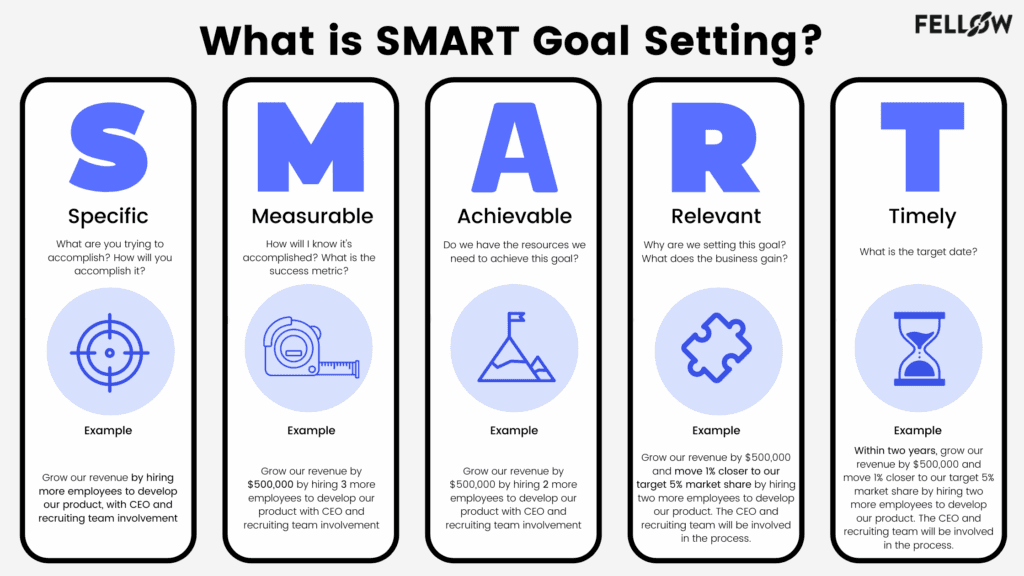
Traditional SMART goals are great, but in 2026, we use Objectives and Key Results (OKRs) to track how we leverage AI to hit our targets.
Ensure your goals are measurable: instead of saying "I want to learn AI," set a goal to "Automate three manual reporting workflows using Fellow and Zapier by the end of Q2."
Celebrate the milestones where you successfully offloaded a task to an AI agent, freeing up your cognitive load for higher-level leadership.
6. Reflect on your mistakes
Perhaps when you embarked on your journey to learn about world capitals or presidential pets, you thought you would be able to acquire a vast amount of information by reading alone. Don’t be afraid to change your plan if you notice it’s not working as you thought it would. Change your course of action so you continue to grow and don’t get discouraged along the way.
Parting advice
Knowledge can open the door to opportunity, achievement, success, and even wealth! If you prioritize learning everyday, you’ll be miles ahead of the rest. Get started by selecting a topic or a field of study that you want to learn about and start consuming information in a variety of mediums. You’ll discover what works for you in no time, and will soon have others seeking out your subject matter expertise!
Record, transcribe and summarize every meeting with the only AI meeting assistant built with privacy and security in mind.