Team Sync Meetings: How to Run Productive Weekly Syncs (+ Free Templates)
•
7
MIN READ

AI Summary by Fellow
Your team's work doesn't happen in isolation. Every project, deadline, and decision connects to someone else's priorities. But when information lives in scattered Slack threads, buried emails, and individual memories, alignment becomes guesswork.
Team sync meetings solve this problem. Done right, they're the fastest way to surface blockers, share progress, and keep everyone moving toward the same goals. Done wrong, they waste time and create more confusion than clarity.
The difference? Structure, consistency, and capturing what matters so you can actually find it later.
If your team sync meetings feel unproductive (or your notes disappear into the void), Fellow turns every sync into searchable intelligence your team can reference anytime.
What is a team sync meeting?
A team sync meeting is a brief, recurring meeting (typically 10 to 15 minutes) where team members share progress updates, surface blockers, and align on immediate priorities. Unlike project-specific meetings or brainstorming sessions, syncs focus on keeping everyone informed and identifying issues before they become problems.
Team sync meetings share similarities with daily standups, but they serve different purposes and audiences. Standups follow Scrum methodology and involve dedicated Scrum team members. Team syncs are more flexible: you can include cross-functional stakeholders, adjust the cadence to weekly or biweekly, and adapt the format to your team's needs.
The core structure remains consistent: each participant briefly answers what they're working on, what's blocking them, and what they need from others. This simple framework creates predictability while surfacing the information that matters most.
Why do teams need regular sync meetings?
Regular sync meetings prevent the gradual drift that happens when people work independently without touchpoints. Small misalignments compound over days and weeks, leading to duplicated work, missed dependencies, and conflicting priorities.
Alignment happens faster
When your team meets consistently, you catch misalignment early. A quick sync reveals that two people are working toward different interpretations of the same goal, or that a decision made in one meeting conflicts with work already in progress. These discoveries take seconds in a sync but can waste days if left unchecked.
Decision-making improves
Sync meetings create space for rapid, informed decisions. Everyone hears the same context simultaneously, so you avoid the back-and-forth of async communication when time matters. When someone raises a blocker, the people who can resolve it are already in the room.
Problems surface before they escalate
The structured prompt to share blockers normalizes asking for help. Team members who might hesitate to send a "stuck on this" message will mention it in a sync, where raising issues is expected. Early visibility into challenges gives you more options for solving them.
Accountability becomes visible
When you commit to something in front of your team, you're more likely to follow through. Sync meetings create natural accountability checkpoints without micromanagement. Last week's commitments become this week's progress updates.
If keeping your team aligned feels like a constant struggle, you don't need more meetings. You need meetings that actually work.
Learn how Fellow helps teams stay in sync →
How to run an effective team sync meeting
The best team sync meetings follow predictable patterns. Consistency reduces cognitive load, so participants know exactly what to expect and can prepare accordingly.
Start with a clear agenda
No agenda, no attenda. This principle applies especially to syncs, where time is limited and focus is essential. Your agenda should include the same core questions each week: what did you accomplish, what are you working on, and what's blocking you.
Share this agenda before the meeting so participants can prepare their updates. When people arrive ready to contribute, you eliminate the awkward silence of gathering thoughts on the spot.
Use Fellow's collaborative meeting agendas to let team members add their updates before the sync starts. AI can help generate relevant talking points based on your meeting title and previous notes, saving you the work of building agendas from scratch.
Keep questions consistent
Your sync should hinge on three to four questions that remain the same each meeting. Consistency creates muscle memory: participants know what's expected and can mentally prepare their responses.
Standard team sync questions include:
What did you complete since our last sync?
What are you working on now?
What's blocking your progress?
What do you need from others on this call?
You can adapt these questions to your team's specific context, but avoid changing them frequently. The power of syncs comes from repetition and predictability.
Set and enforce time limits
A 15-minute time limit keeps syncs focused. When you commit to brevity, participants self-edit and prioritize their most important updates. Longer meetings invite tangents and detailed discussions that belong in separate conversations.
Start on time, even if people are still joining. End on time, even if topics remain. This discipline signals that everyone's time matters and encourages efficiency. If a topic needs deeper discussion, note it and schedule a follow-up.
Capture everything automatically
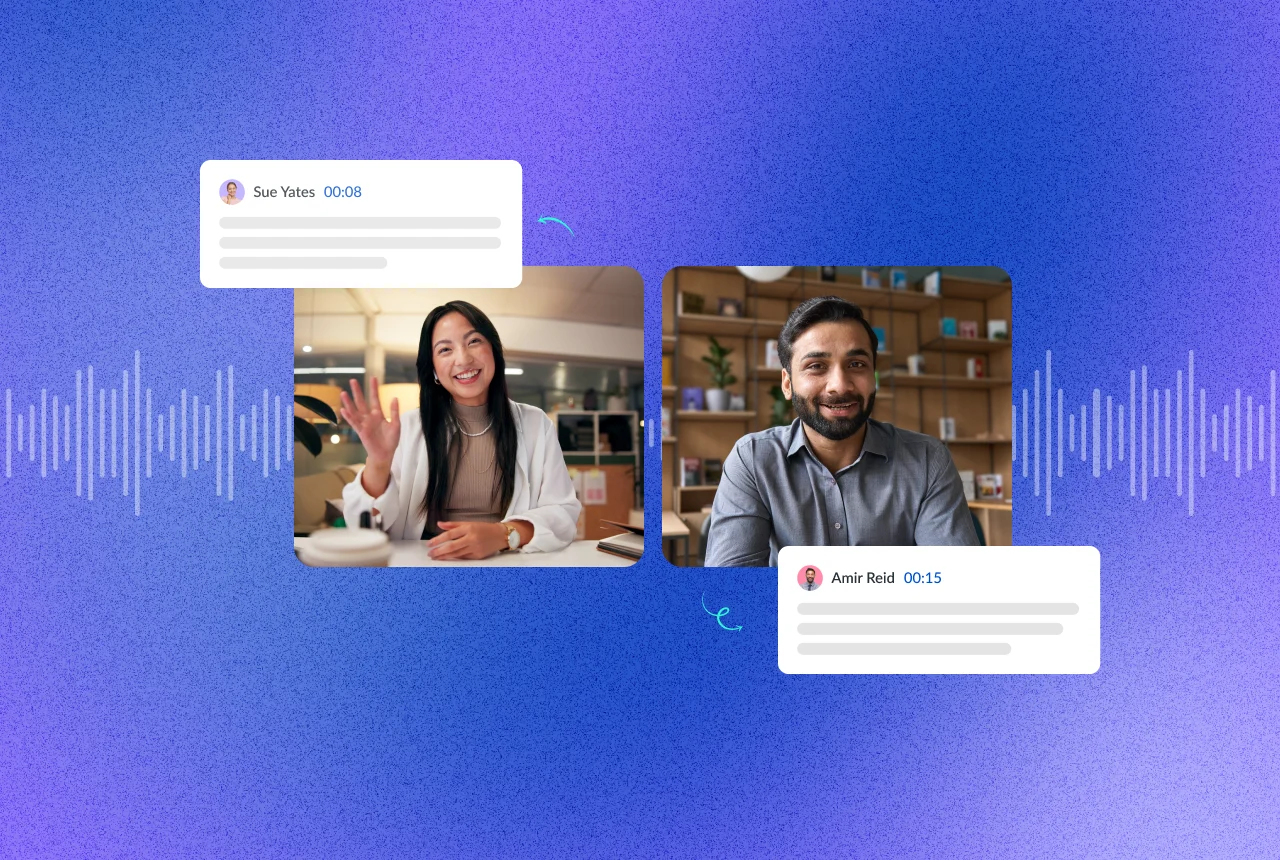
Manual note-taking during syncs creates two problems: someone misses the discussion while writing, and the notes inevitably get lost or forgotten. Modern teams use AI meeting assistants to record, transcribe, and summarize syncs automatically.
With Fellow, every sync gets captured without anyone sacrificing their attention. AI meeting notes extract the key decisions and commitments, so you have a searchable record of what happened. When someone asks "What did we decide about X?" two weeks later, you can find the answer in seconds.
Turn updates into action items
The value of a sync extends beyond the meeting itself. When someone mentions a blocker, that needs to become a tracked action item with an owner and deadline. When a decision gets made, it should be documented and visible.
Fellow automatically extracts action items from your conversations, assigns owners, and integrates with your project management tools through 50+ native integrations plus 8,000+ apps via Zapier and n8n. Your sync outcomes flow directly into the systems your team already uses.
4 tips for running better team sync meetings
Beyond the basics, these practices distinguish good syncs from great ones.
1. Allow occasional opt-outs
Not every team member needs to attend every sync. If someone has nothing to share and no blockers to raise, their time might be better spent on actual work. Give people permission to skip occasionally, especially in fast-paced environments where every minute counts.
The key is making opt-outs intentional rather than habitual. If someone consistently has nothing to share, that might signal a different problem worth addressing.
2. Distinguish syncs from problem-solving sessions
Syncs surface problems; they don't solve them. When a complex issue arises, note it and schedule a separate discussion with the relevant people. Trying to solve problems during sync time blows up your timeline and bores everyone not involved in that specific issue.
Keep a "parking lot" for topics that need deeper exploration. This practice respects everyone's time while ensuring important issues don't get forgotten.
3. Use video for remote syncs
For virtual team sync meetings, cameras-on participation increases engagement and reduces multitasking. When people can see each other, they're more likely to pay attention and contribute meaningfully.
This doesn't mean mandating video for every meeting, but syncs benefit from the visual connection. The brief duration makes camera fatigue less of a concern than in longer meetings.
4. Minimize distractions
Fifteen minutes of focused attention requires putting phones away and closing unnecessary tabs. Make this expectation explicit: sync time is for the sync, not for catching up on Slack or email.
For remote teams, this means establishing norms around notification management and single-tasking during the brief sync window.
Team sync meeting vs. other meeting types
Understanding how syncs fit into your meeting ecosystem helps you use them effectively.
Meeting type | Duration | Frequency | Purpose | Participants |
|---|---|---|---|---|
Team sync | 10-15 min | Daily or weekly | Progress updates, blockers, alignment | Core team members |
Daily standup | 15 min | Daily | Sprint progress, impediments | Scrum team only |
1-on-1 | 30-60 min | Weekly | Individual development, feedback | Manager + direct report |
Project kickoff | 60+ min | Once per project | Scope, roles, timelines | All stakeholders |
Retrospective | 60 min | End of sprint/project | Process improvement | Team members |
Team syncs complement these other meeting types without replacing them. They handle the ongoing coordination that keeps work moving between deeper discussions.
Free team sync meeting agenda templates
Starting with a proven structure saves time and ensures consistency. These templates provide frameworks you can customize for your team's needs.
Basic team sync template:
Quick wins from the past week (2 min)
Current focus areas (5 min)
Blockers and needs (5 min)
Key decisions or announcements (3 min)
Cross-functional sync template:
Updates by department/function
Dependencies and handoffs
Shared priorities alignment
Cross-team requests
Leadership weekly sync template:
Company-wide updates
Team health indicators
Resource or support needs
Strategic alignment check
Fellow offers pre-built meeting templates including Dan Martell's Sync Meeting template and Polly's Leadership Weekly Sync template. These expert-designed templates come with recommended talking points and are fully customizable.
How to make team sync meetings searchable
The information shared in syncs has value beyond the meeting itself. When someone references a decision made three weeks ago, or a blocker that was supposed to be resolved, you need a way to find that context.
Traditional approaches fail here. Handwritten notes get lost. Shared documents become graveyards of unorganized text. Chat messages scroll into oblivion.
Ask Fellow transforms your meeting history into queryable intelligence. After your syncs are recorded and transcribed, you can ask natural-language questions like "What blockers did the engineering team raise last month?" or "When did we decide to postpone the launch?" and get answers instantly.
This capability changes how teams operate. Instead of relying on individual memories or hunting through documents, you access your organization's collective knowledge directly. The context from past syncs informs current decisions.
Fellow captures meetings across Zoom, Google Meet, Microsoft Teams, in-person conversations, and Slack huddles (with or without a bot), so your team sync intelligence stays consistent regardless of how you meet. With SOC 2 Type II certification, HIPAA compliance, and a commitment to never train AI on your data, your meeting recordings remain secure.
Frequently asked questions
What is a team sync meeting?
A team sync meeting is a brief, recurring check-in where team members share progress updates, surface blockers, and align on immediate priorities. Syncs typically last 10 to 15 minutes and follow a consistent format with standard questions about accomplishments, current work, and obstacles. Unlike project-specific meetings or brainstorming sessions, syncs focus specifically on coordination and visibility across the team.
How often should teams hold sync meetings?
Most teams benefit from weekly syncs, though the ideal frequency depends on how quickly work changes and how interdependent team members are. Fast-moving teams with many dependencies may need daily syncs, while teams with more independent work can sync biweekly. The key is consistency: whatever cadence you choose, stick to it so syncs become a reliable rhythm rather than an unpredictable interruption.
What's the difference between a sync meeting and a standup?
Daily standups are a specific practice from the Scrum framework, involving dedicated Scrum team members and focusing on sprint progress. Team sync meetings are more flexible: you can include cross-functional participants, adjust the cadence, and adapt the format. Both serve alignment purposes, but syncs aren't tied to a specific methodology and can work for any team structure.
How do you keep sync meetings short and focused?
Set a strict time limit (typically 15 minutes) and enforce it consistently. Use the same agenda questions each meeting so participants know what to prepare. Start on time regardless of attendance, and move detailed discussions to separate follow-up meetings. Using an AI meeting assistant to capture notes means no one needs to sacrifice attention to documentation, keeping the focus on efficient communication.
What should be included in a team sync agenda?
A standard team sync agenda covers four areas: accomplishments since the last sync, current work focus, blockers or challenges, and requests from other team members. Keep these questions consistent week over week to build predictability. Share the agenda before the meeting so participants can prepare their updates, and use collaborative tools to let team members add topics asynchronously.
How can AI improve team sync meetings?
AI meeting assistants eliminate the manual work that makes syncs feel burdensome. They automatically record and transcribe discussions, generate summaries and meeting minutes, extract action items with owners and deadlines, and make everything searchable. Instead of relying on someone to take notes (and hoping those notes don't get lost), teams get a complete, queryable record of every sync automatically.
Turn every team sync into searchable intelligence
Your team sync meetings contain valuable information: decisions made, blockers raised, commitments given. But that value evaporates when meeting content lives only in participants' memories.
Fellow transforms syncs from ephemeral conversations into permanent, searchable organizational intelligence. Every update gets captured. Every decision gets documented. Every action item gets tracked. And when you need to reference something from a sync three months ago, you find it in seconds.
Stop losing context between meetings. Start building a searchable record of your team's progress and decisions.
Trusted by teams at Shopify, HubSpot, Vidyard, and Motive. SOC 2 Type II certified.
Record, transcribe and summarize every meeting with the only AI meeting assistant built with privacy and security in mind.