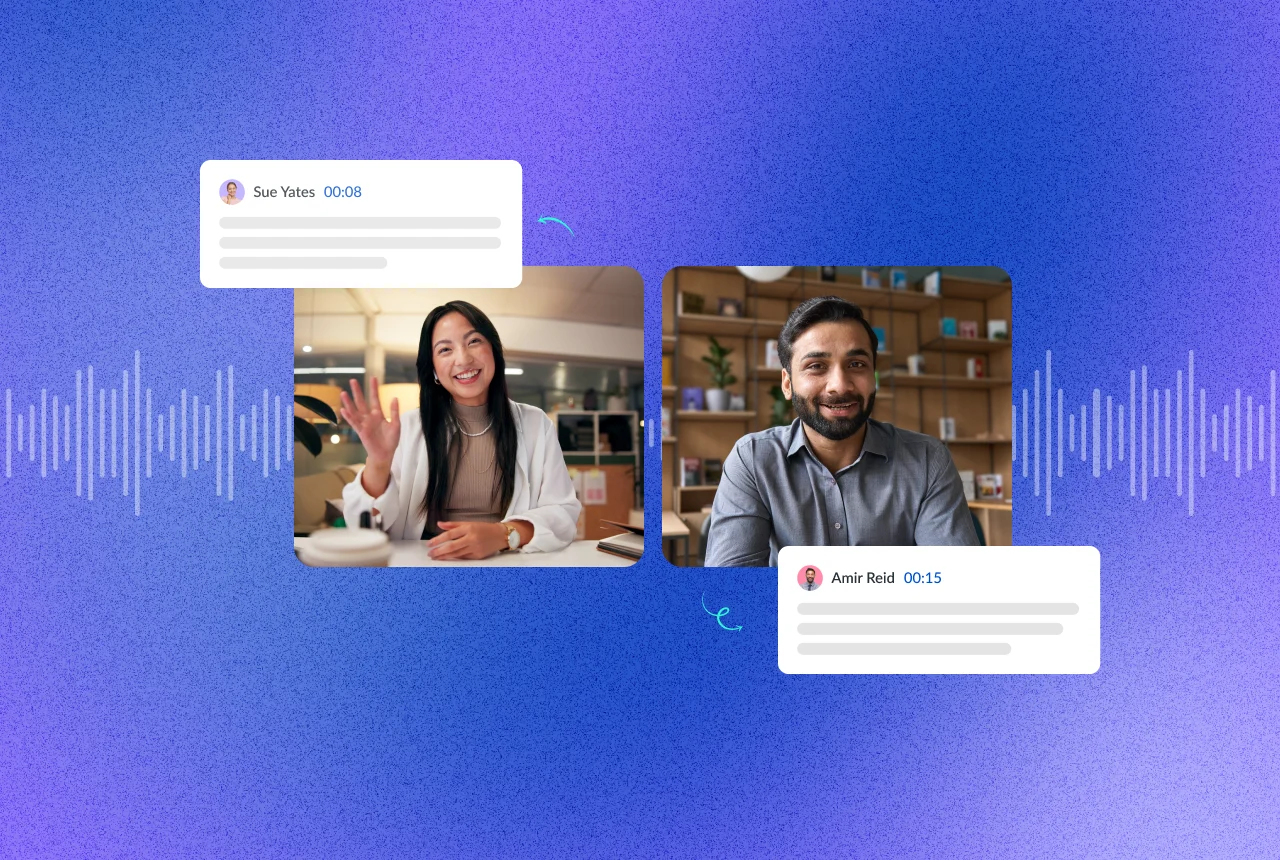
No Agenda, No Attenda: Why Recording a Bad Meeting Just Creates Searchable Chaos
•
7
MIN READ

AI Summary by Fellow
There's a popular belief in the AI era that recording meetings solves the meeting problem. Missed context? Just check the transcript. Forgot a decision? Search the recording. Lost an action item? It's in there somewhere.
Here's the uncomfortable truth: a bad recorded meeting is still a bad meeting. You've just created searchable chaos instead of unsearchable chaos.
At Fellow, we live by a different philosophy: No Agenda, No Attenda.
It's not just a catchy phrase—it's the foundation of how productive teams actually work. And it's why we built an AI meeting assistant that helps you prepare for meetings, not just capture them.
Why does recording alone fail to fix meetings?
Recording technology has exploded. Transcription accuracy is remarkable. AI can generate summaries, extract action items, and identify speakers with impressive precision. Yet meetings remain the number one productivity complaint in organizations worldwide.
The problem isn't capture, it's quality. When your source material is a chaotic, unfocused conversation where half the attendees didn't know why they were there, even the most sophisticated AI produces garbage output. The meeting notes are comprehensive documentation of confusion. The action items are vague because the discussion was vague. The searchable transcript just helps you find the exact moment everyone got derailed.
Recording without preparation is like filming a movie without a script and expecting the editor to create a coherent story. All the raw footage in the world won't save a production that never had a plan.
What does "No Agenda, No Attenda" actually mean?
"No Agenda, No Attenda" is a simple rule with profound implications: if a meeting doesn't have a clear agenda shared in advance, you don't attend. Period.
This isn't about being difficult or territorial with your calendar. It's about establishing a baseline standard that protects everyone's time—including the meeting organizer's. When "No Agenda, No Attenda" becomes the norm, three things happen:
Meeting organizers think before scheduling. When attendees require an agenda, organizers must articulate why the meeting exists before sending the invite. Many meetings that would have been scheduled reflexively simply don't happen—because the organizer realizes they don't actually need a synchronous conversation.
Attendees arrive prepared. With a clear agenda circulated in advance, everyone knows what to expect, what to prepare, and what decisions need to be made. The meeting starts at full speed instead of spending the first ten minutes establishing context.
Meetings become accountable. An agenda creates a contract between organizer and attendees. Did we cover what we said we'd cover? Did we make the decisions we needed to make? Without an agenda, there's no way to evaluate whether a meeting succeeded or failed.
How do you spot a meeting without a real agenda?
Sometimes meetings technically have agendas that aren't really agendas at all. A calendar invite that says "Team Sync" or "Quick Chat" isn't an agenda—it's a placeholder. Here are the telltale signs that a meeting is operating without genuine preparation:
People arrive late and it doesn't matter. When there's no structured starting point, latecomers haven't really missed anything. If your meetings can absorb ten minutes of stragglers without impact, they probably didn't need everyone in the first place.
Attendees spend the first five minutes asking "So what are we talking about?" This question should never be asked inside a meeting. If it is, the meeting has already failed before it started.
The wrong people are in the room. Without an agenda, organizers default to inviting everyone who might possibly be relevant. The result is a room full of people who shouldn't be there and a missing person or two who should.
Conversations spiral without resolution. Meetings without agendas become verbal wandering—interesting tangents that never return to a main point because there was no main point to return to.
No one knows when it's over. Without objectives to accomplish, there's no natural ending. Meetings run until time expires or someone finds an excuse to leave.
If this sounds familiar, you don't have a recording problem, you have a preparation problem. Fellow was built to solve both →
Why do the best AI meeting assistants start before the meeting?
Here's what separates genuinely useful AI meeting tools from simple transcription services: the best AI meeting assistants help you prepare, not just capture.
Think about what you actually need from a meeting tool:
Before the meeting: A collaborative space where organizers and attendees can build the agenda together, add talking points, and surface relevant context from previous conversations. If someone can't attend, they should be able to add their input asynchronously.
During the meeting: Automatic capture that doesn't require anyone to take notes, so everyone can actually participate. Real-time transcription across whatever platform you're using—Zoom, Google Meet, Teams, in-person, or Slack huddles.
After the meeting: AI-generated meeting notes and summaries that reflect what was actually discussed. Automatic action item extraction with clear owners. A searchable recording library where you can find decisions and context later.
Most AI meeting tools focus exclusively on the "during" and "after." They'll capture your meeting beautifully—but they don't help you make the meeting worth capturing in the first place.
Fellow takes a different approach. Collaborative agendas are built into the core product because we believe you shouldn't record a meeting that wasn't worth having. When you combine thoughtful preparation with AI-powered capture, you get meetings that are both productive in the moment and valuable as organizational knowledge afterward.
How do you implement "No Agenda, No Attenda" in your organization?
Adopting this philosophy requires more than personal commitment—it requires cultural change. Here's how to make it stick:
Start with yourself
Before asking others to change, model the behavior. Decline meetings that don't have agendas (politely, with an explanation). Ensure every meeting you organize includes a clear agenda sent in advance. When people see that the standard is real, they'll start meeting it.
Make agenda creation frictionless
The number one reason meetings don't have agendas is that creating them feels like extra work. The solution isn't to demand more work from organizers—it's to make preparation effortless.
Fellow's collaborative agendas live directly in the calendar invite and allow anyone to add talking points before the meeting. Pre-meeting briefs automatically surface relevant context from previous conversations, so organizers don't have to dig through notes to remember what was discussed last time. When preparation takes seconds instead of minutes, it actually happens.
Set explicit expectations for different meeting types
Not every meeting needs the same level of agenda detail:
One-on-ones: A running document where both parties can add topics throughout the week
Team meetings: Clear objectives, time-boxed agenda items, and named owners for each section
Project syncs: Status updates tied to specific deliverables, blockers that need resolution, and decisions that need to be made
Brainstorms: A defined problem statement and any pre-work or context participants should review beforehand
The format varies, but the principle doesn't: everyone should know why they're meeting and what they need to accomplish.
Use technology to enforce standards
Fellow's Meeting Guidelines automatically prompt organizers when a meeting is missing an agenda or has too many attendees. These gentle nudges turn best practices into default behaviors without requiring constant policing.
If your meetings regularly exceed seven or eight people, something is wrong with your meeting design. The guideline isn't arbitrary—research consistently shows that meeting effectiveness drops dramatically as attendance increases. Use technology to catch these issues before they become problems.
What makes Fellow different from other AI meeting assistants?
Most AI meeting assistants entered the market as transcription tools and added features from there. Fellow started with a different premise: meetings are a system, and fixing them requires addressing preparation, execution, and follow-through together.
Collaborative agendas built in. Agendas aren't an afterthought—they're foundational. Every meeting can have a shared agenda where attendees contribute talking points, add context, and prepare asynchronously.
AI that understands your meeting history. Ask Fellow lets you query across all your meetings with natural language. "What did we decide about the product roadmap?" "What commitments are at risk?" "When did we last discuss this customer?" Your meetings become searchable organizational intelligence—but only because each meeting was structured enough to produce useful intelligence.
Flexible capture for how teams actually work. Fellow records across Zoom, Google Meet, Microsoft Teams, in-person meetings, and Slack huddles—with or without a visible bot. Botless recording means you can capture conversations without the awkwardness of a bot joining sensitive discussions.
Enterprise security without compromise. SOC 2 Type II certified, HIPAA and GDPR compliant, with privacy controls that align access to organizational roles. Fellow never trains AI models on your data. Your conversations stay yours.
Deep integrations that turn meetings into workflows. 50+ native integrations plus connections to 8,000+ apps via Zapier and n8n mean action items flow directly into Asana, Jira, or whatever project management tools your team uses.
Teams at Shopify, HubSpot, Vidyard, and Motive use Fellow because they've learned the same lesson: the best meeting recording is a recording of a well-run meeting. See their stories →
A simple framework for meetings worth having
Before your next meeting, run through this checklist:
Does this need to be a meeting at all? Could the objective be accomplished asynchronously with a document, a Slack thread, or a recorded video message?
Is there a clear agenda with specific outcomes? Not "discuss project status" but "decide on launch date, identify remaining blockers, assign owners for open items."
Are only essential people invited? If someone is optional, make them optional. If someone is attending "just to be in the loop," send them the notes instead.
Does everyone have the context they need to contribute? Share pre-reading, surface relevant previous discussions, and ensure attendees aren't walking in cold.
Is there a plan for capturing decisions and action items? Whether that's Fellow or another tool, don't rely on memory and ad-hoc notes.
Meetings that pass this test are worth recording. Meetings that don't pass it shouldn't happen.
Turn every meeting into shared intelligence
The goal isn't just to record your meetings, it's to make your meetings worth recording. "No Agenda, No Attenda" is the starting principle, and the right AI meeting assistant makes it sustainable.
Fellow combines collaborative agendas, AI-powered capture, and organization-wide search so your meetings become genuine intelligence rather than searchable noise. Every conversation is documented. Every decision is findable. Every action item has an owner.
Frequently asked questions
What does "No Agenda, No Attenda" mean?
"No Agenda, No Attenda" is a meeting philosophy stating that meetings without clear agendas shared in advance shouldn't happen. The principle holds that if an organizer can't articulate what a meeting will accomplish before scheduling it, the meeting isn't ready—and attendees should decline until an agenda exists. This standard improves meeting quality by forcing intentionality and enabling participant preparation.
Does recording meetings make them more productive?
Recording meetings improves documentation but doesn't inherently improve productivity. A recorded meeting without an agenda produces a transcript of unfocused conversation—comprehensive documentation of confusion. Recording is most valuable when combined with strong meeting preparation: clear agendas, defined outcomes, and appropriate attendees. The best AI meeting assistants address both preparation and capture, not just transcription.
How do I decline a meeting without an agenda?
Decline politely with an explanation: "I'd like to prepare for this meeting effectively—could you share an agenda with the key discussion points and decisions we need to make? I'm happy to join once I know how to contribute." Most organizers will appreciate the prompt and provide the context. Those who don't reveal something important about their meeting culture.
What should a meeting agenda include?
An effective meeting agenda includes the meeting's objective (the decision or outcome needed), specific talking points with time allocations, the relevant context or pre-reading, the names of who is responsible for each section, and any decisions that need to be made. The best agendas are collaborative—attendees can add topics before the meeting—and brief enough that people actually read them.
Can AI meeting assistants help with meeting agendas?
Yes. Advanced AI meeting assistants like Fellow include collaborative agenda features where organizers and attendees build the agenda together before the meeting. Some tools also provide pre-meeting briefs that surface relevant context from previous conversations, reducing the organizer's prep time. This combination of human collaboration and AI assistance makes agenda creation faster and more effective than either approach alone.
Why do bad meetings keep happening despite better technology?
Better transcription technology has made it easier to capture meetings but hasn't addressed the root causes of bad meetings: unclear objectives, unnecessary attendees, poor preparation, and meeting culture that defaults to synchronous conversation. Recording a bad meeting doesn't make it good—it just documents the problems. Solving bad meetings requires addressing preparation and structure, not just capture.
Record, transcribe and summarize every meeting with the only AI meeting assistant built with privacy and security in mind.